Calendar / 2024 activities

THE ACTIVITY ARCHIVE / 2024

In the path
of the shadow.

The society’s observing team traveled to Ozark Acres, Arkansas, to photograph the total solar eclipse of April 8.

In the path of the shadow.
Year2024
Stories01 field reports
CommunityAmerican Bootes
RecordPast activities

ABAS FIELD NOTES · 2024

Total Solar Eclipse in Ozark Acres, Arkansas

Setting up in Ozark Acres

On April 8, 2024, a total solar eclipse crossed North America, passing through Mexico, the United States, and Canada. The American Boötes Astronomical Society’s eclipse observing team traveled to Ozark Acres, Arkansas, where they set up telescopes and cameras to observe and photograph the eclipse.

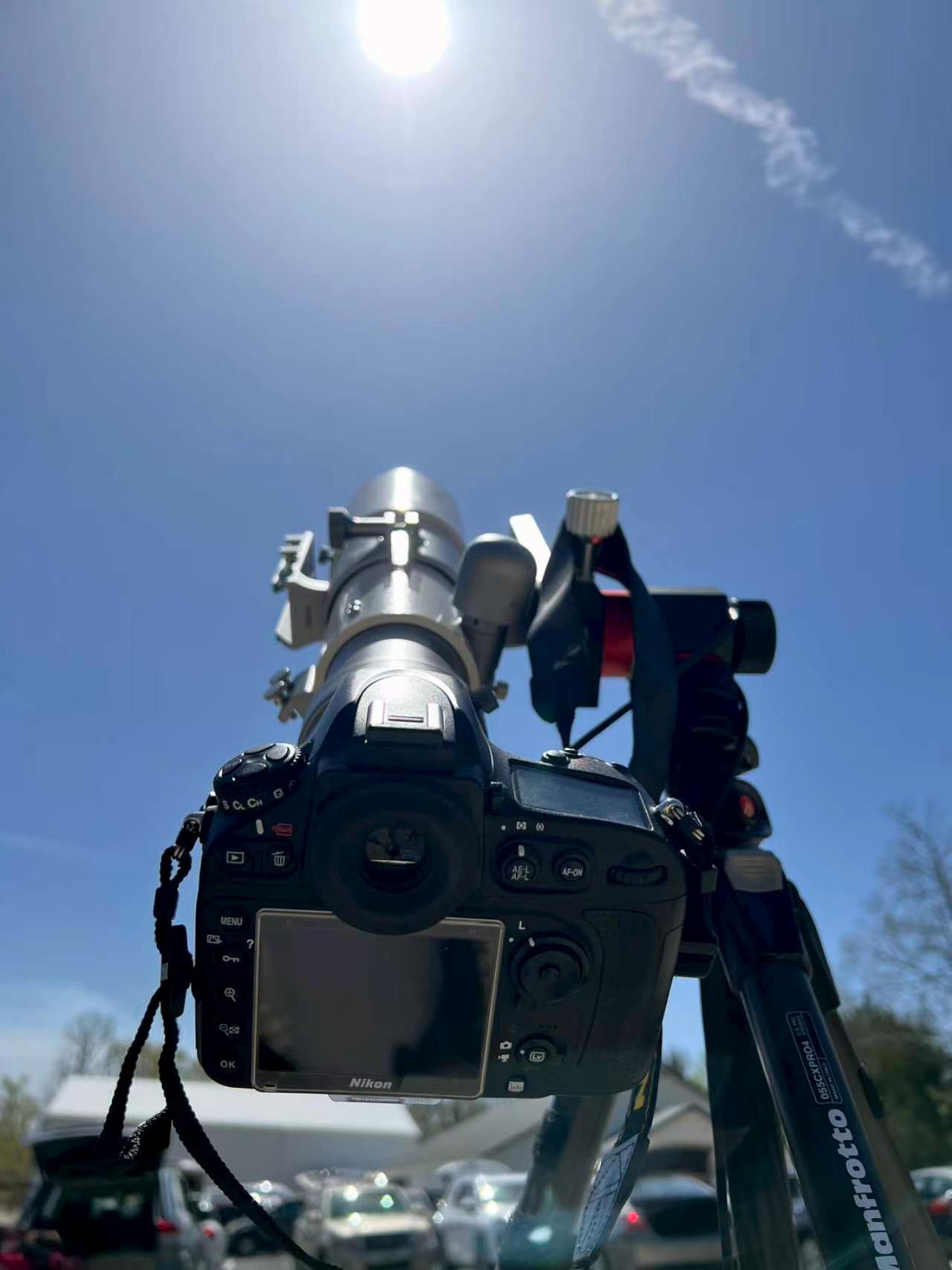
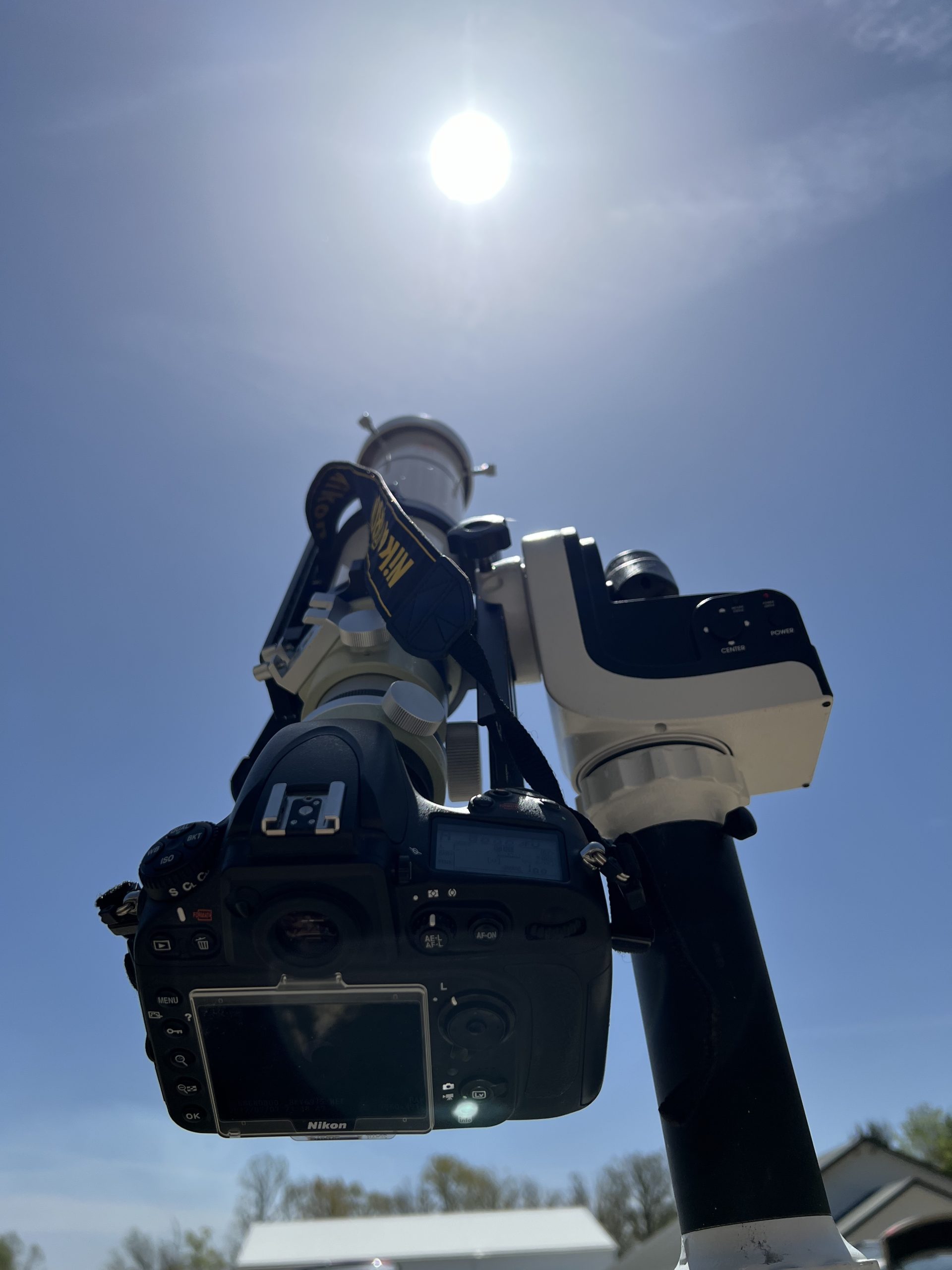
The observing site was an open grassy area beside a parking lot. The team used two setups, one for still photography and the other for video. Pointed at the Sun side by side, they captured both fleeting details and the eclipse’s progression.
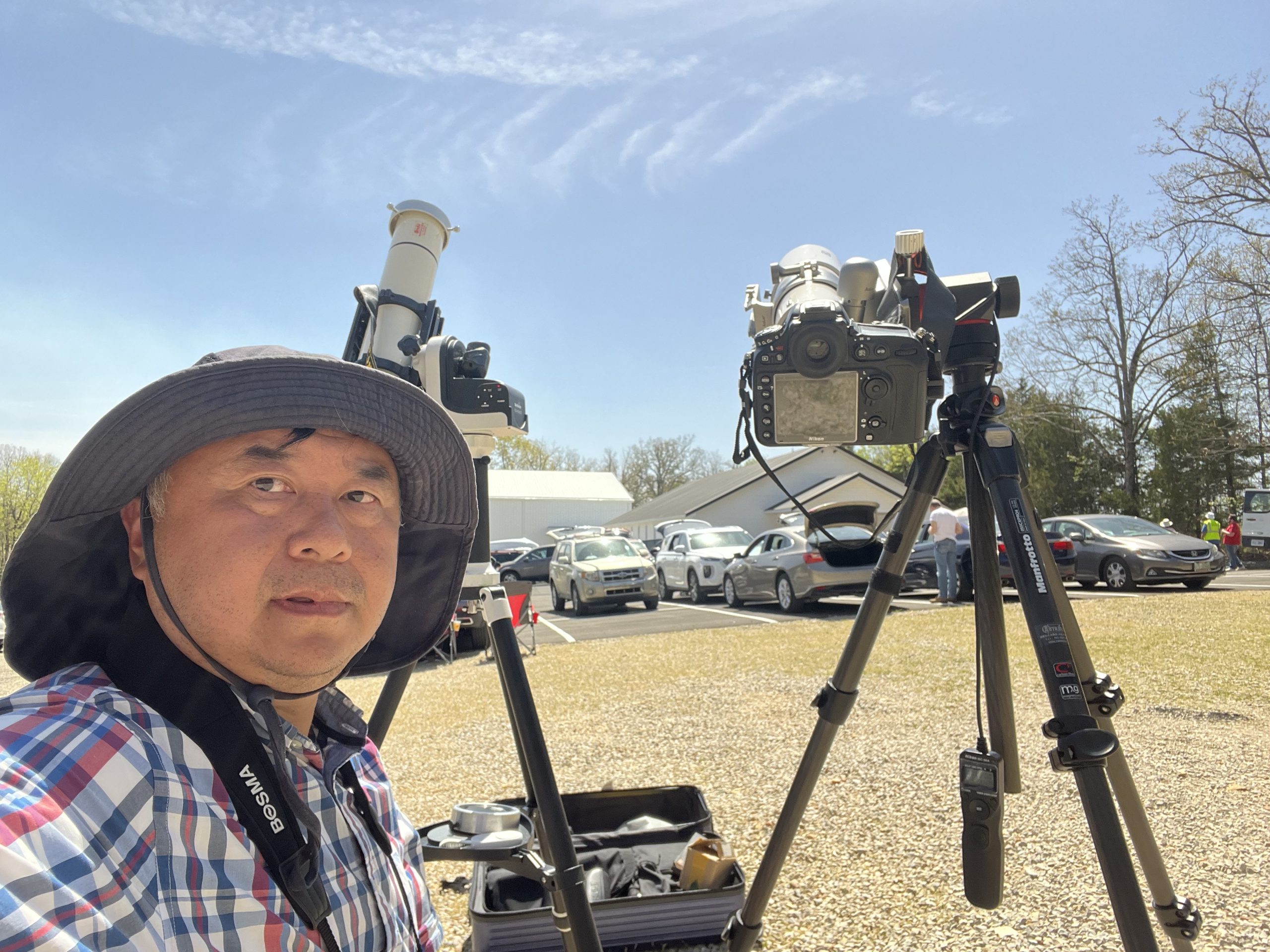
Renjiang Xie beside two telescope-and-camera setups pointed at the Sun in Ozark Acres, Arkansas
The eclipse observing team prepares in Ozark Acres on April 8, 2024. Renjiang Xie stands beside the two setups, already pointed at the Sun.
A camera attached to the rear of a telescope on a white mount, pointed at the Sun
One of the two imaging setups at the Ozark Acres site.
A second telescope-and-camera setup on a tripod, with a shutter-release cable hanging down
The second setup. One recorded still photographs, the other video.

Around totality

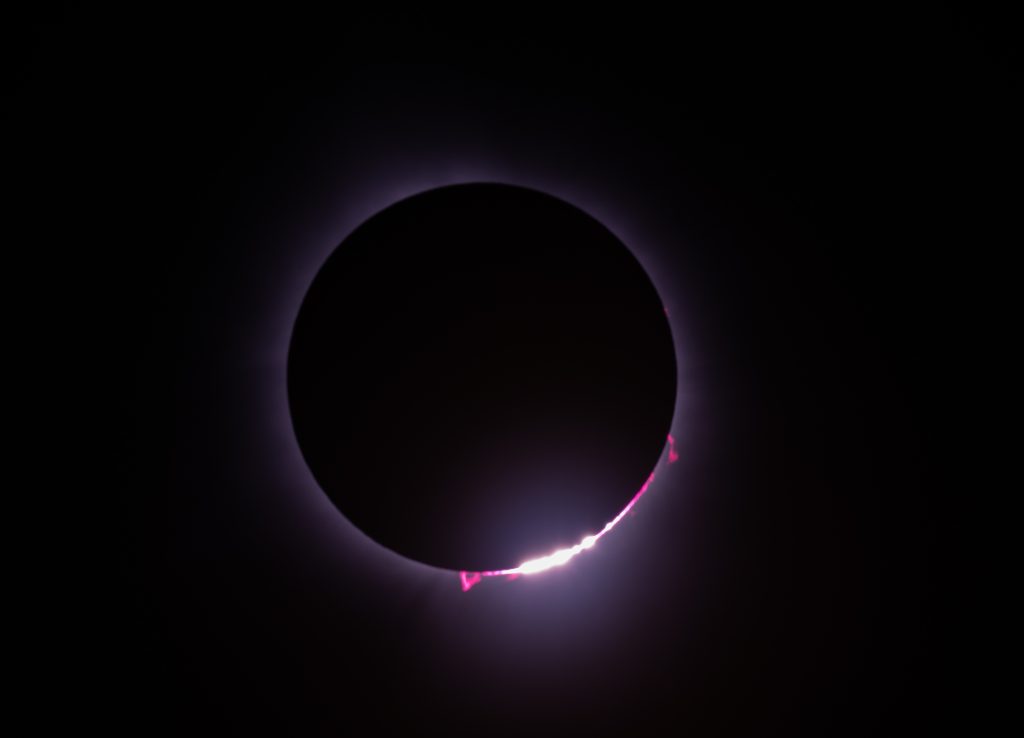
During the brief transitions just before and after totality, bright light along the Sun’s edge and red prominences stood out in the images. The team’s photographs show the Moon’s dark silhouette covering almost the entire solar disk, with bright points and arcs of light along the edge and prominences extending beyond it.
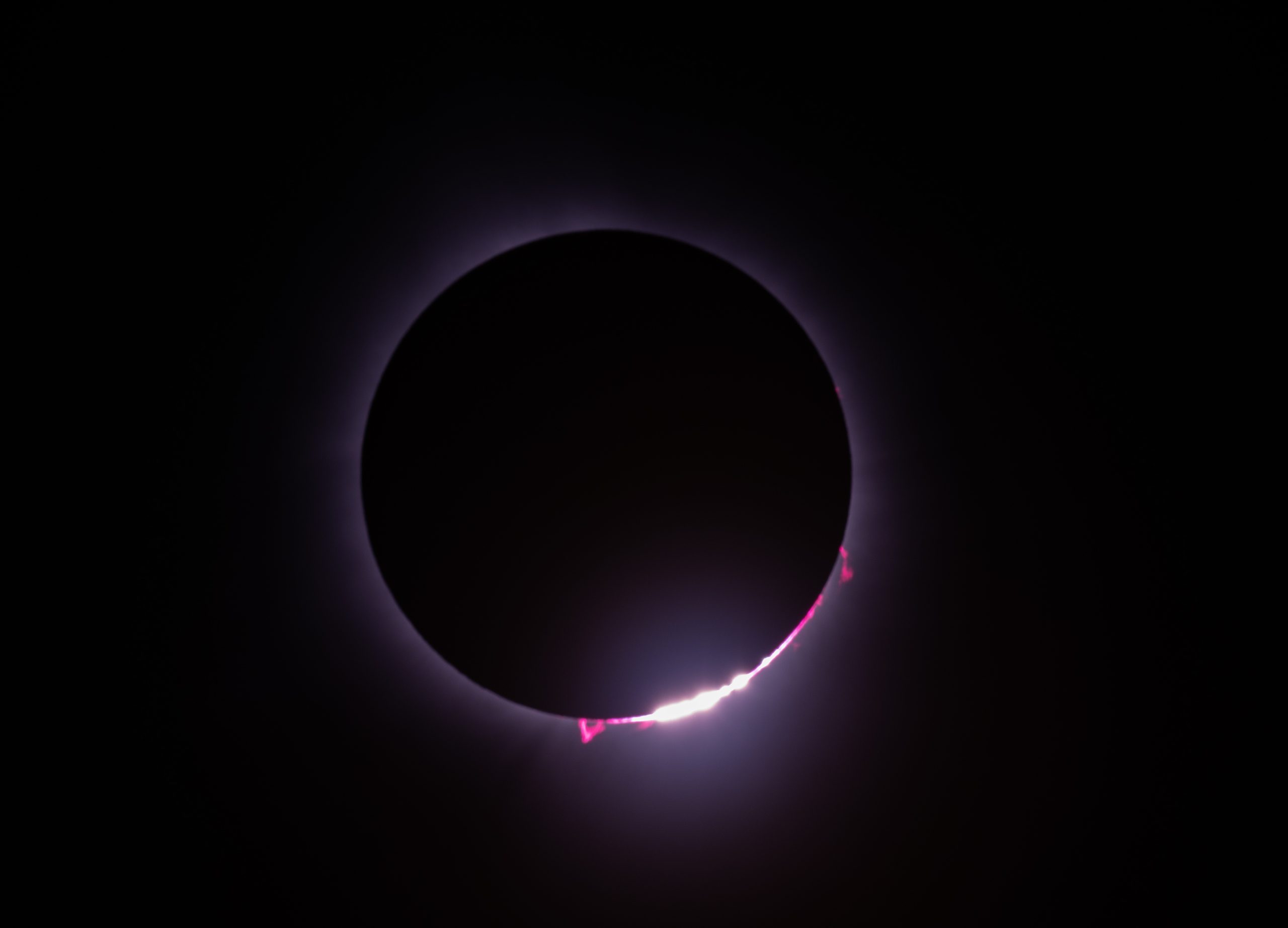
Close-up of the eclipse near totality, with bright points along the Moon’s edge and red prominences
A close-up of the eclipse photographed in Ozark Acres on April 8, 2024, with bright points and arcs of light along the Moon’s edge and red prominences.

KEEP EXPLORING

More years under the stars.

Scroll to Top