
ABAS / Photography
Gallery
Curated view · Take a journey from our community into deep space.
How distances work
An illustrative distance axis, not to scale. Spacing is arranged around the photographs, preserving their proportions and grouping nearby subjects. Boundary lines enclose the photographs; the distance labels provide approximate values. 1,000 km is a near-Earth display bound, not the edge of the atmosphere. The Solar System bound uses an approximate 1.6 ly outer Oort Cloud scale. The 100,000 ly galactic bound is a display guide, not a precise distance to the Milky Way’s edge; direction and the halo matter.
Meteor: typical altitude ≈100 km, not measured line-of-sight distance. Deep-sky study I: 26,000 ly Galactic-center proxy requested for sorting, not an identification of this field. Heart & Soul (IC 1805 / IC 1848): visual identification, ≈7,500 ly adopted; published estimates vary. Eclipse photographs show both the Moon (mean distance ≈384,400 km) and the Sun (mean distance ≈149.6 million km, or 1 AU); both are marked together. M8 represents the M8/M20/M21 field.
References: Heart & Soul comparison · Heart distance · Meteor heights · Galactic center · Solar System scale
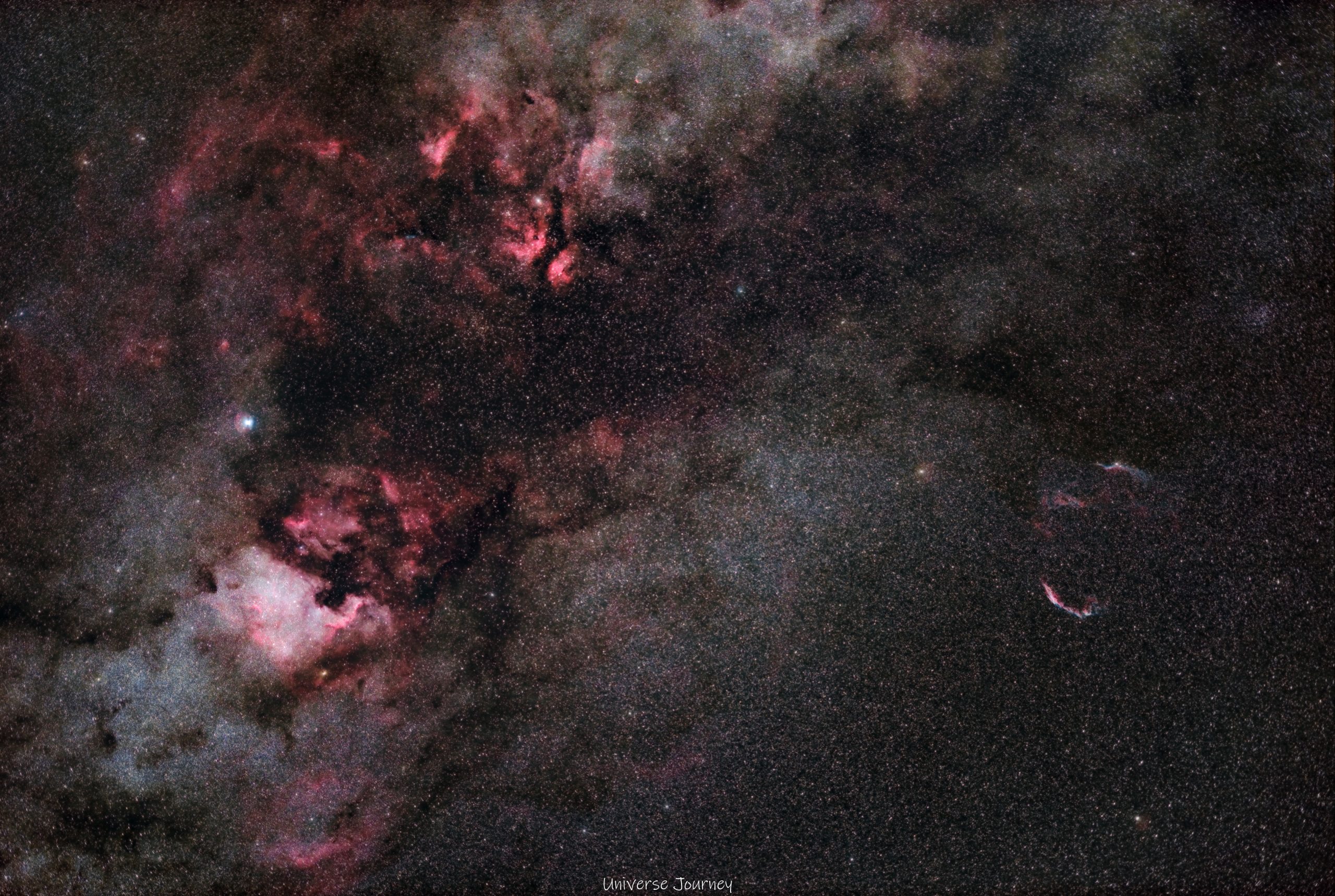 ≈26,000 ly · Galactic-center reference (proxy)Deep-sky study IPhotographer · Yufan LuoDate · —Equipment · —
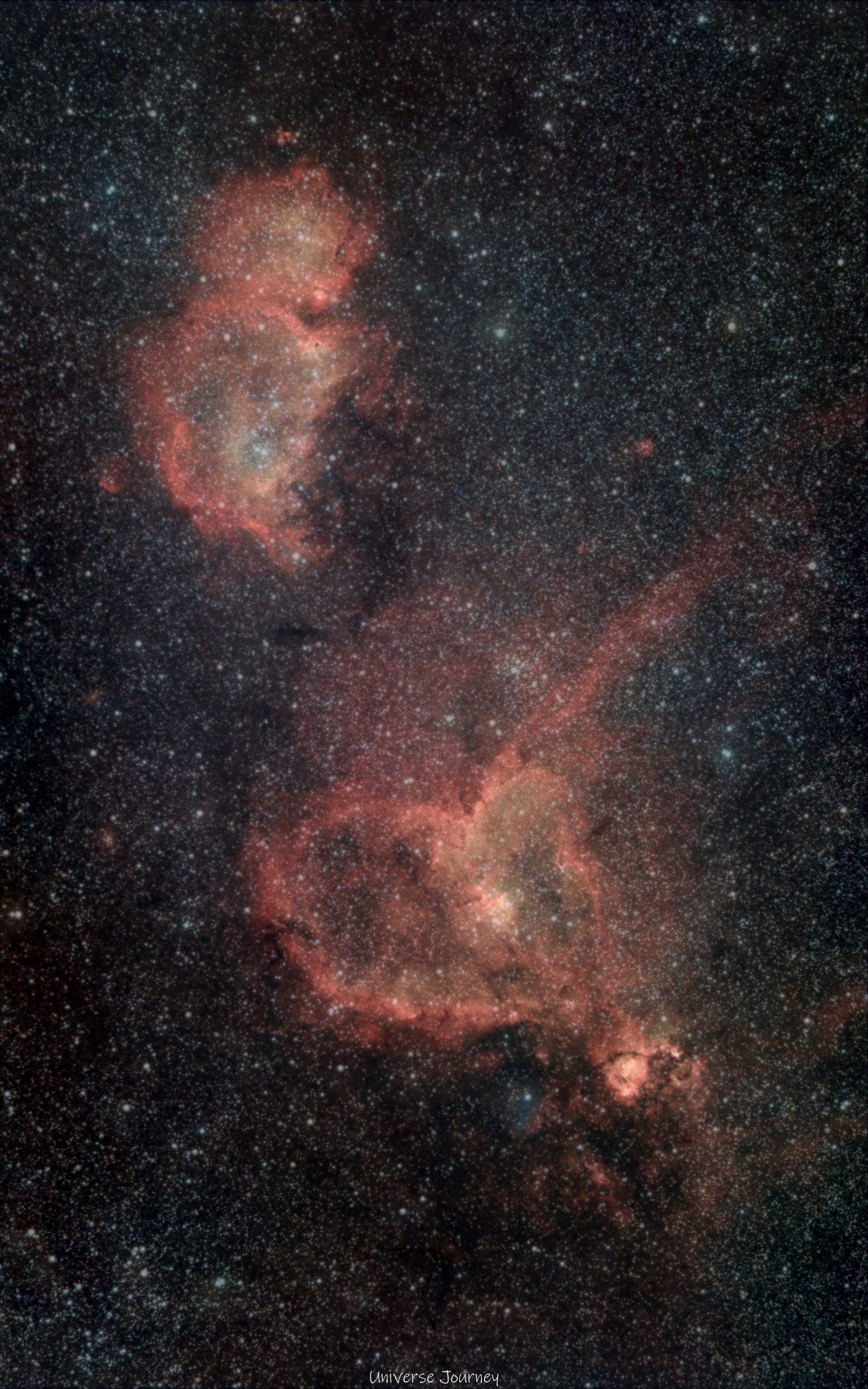 ≈7,500 ly · Heart & Soul (approximate)Heart & Soul Nebulae (visual identification)Photographer · Yufan LuoDate · —Equipment · —
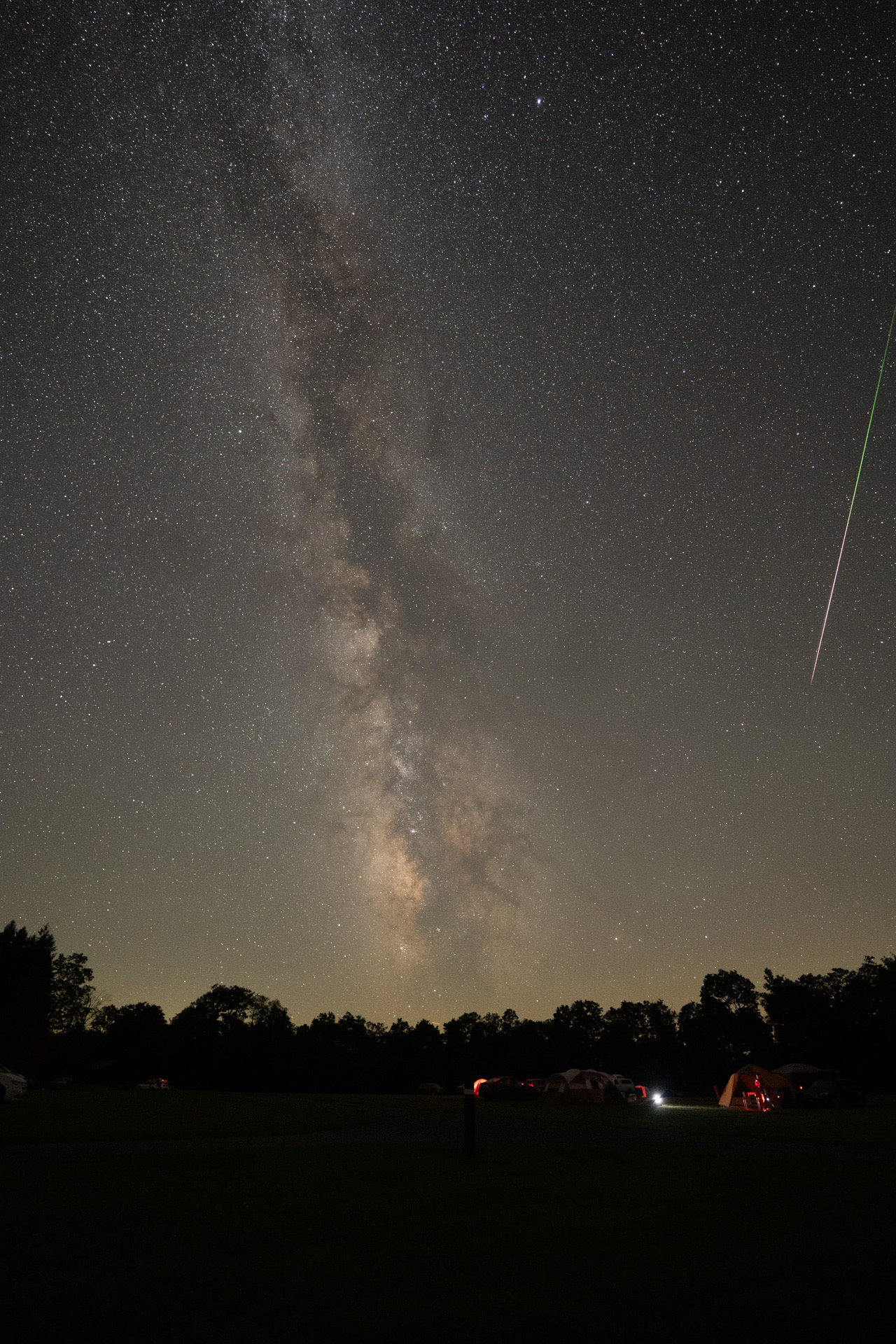 ≈100 km · Typical meteor altitude (not measured)Meteor above the campsitePhotographer · Zhibo YuDate · —Equipment · —
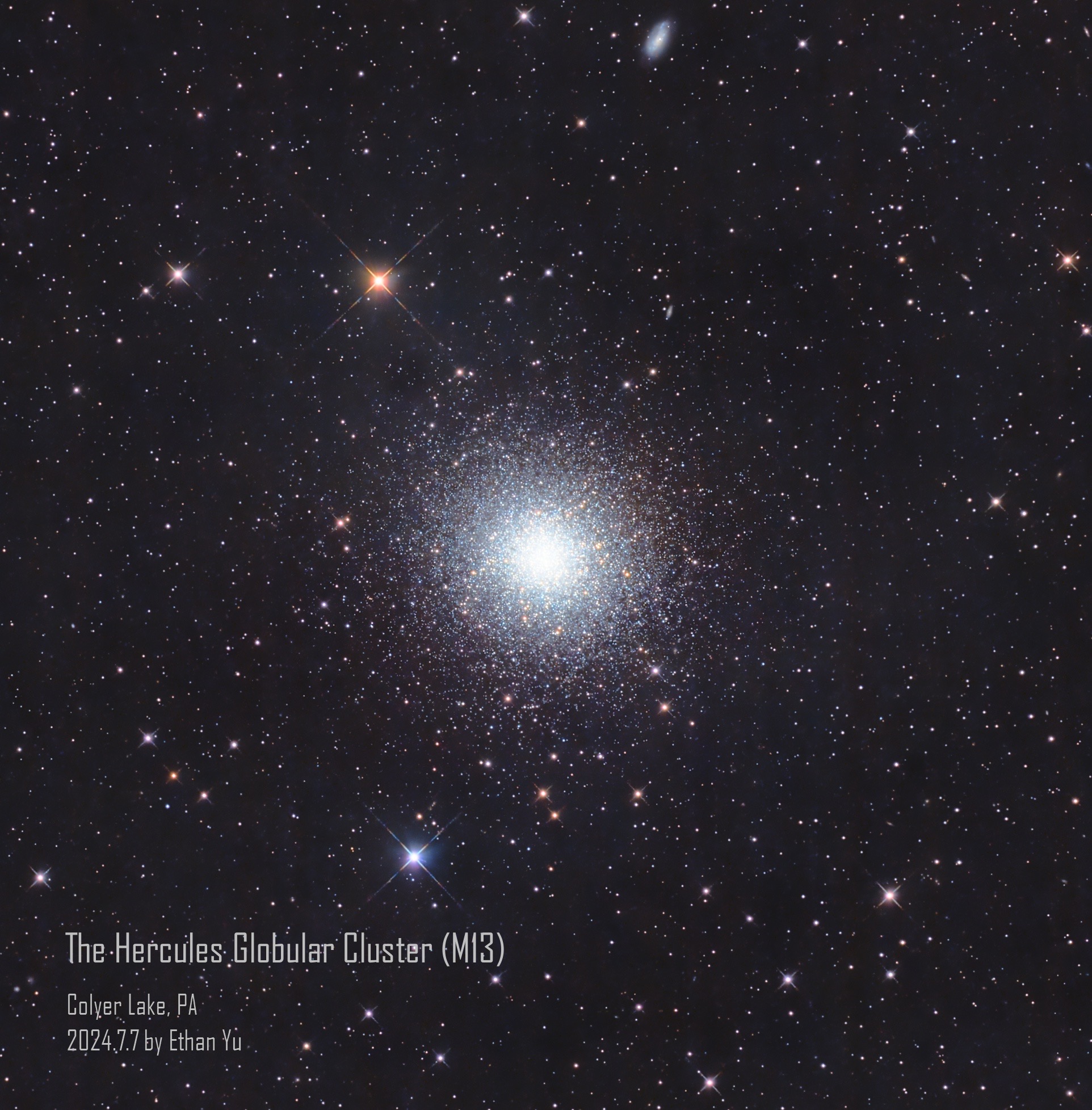 ≈25,000 light-years · M13The Hercules Globular Cluster (M13)Photographer · Zhibo YuDate · 2024-07-07Equipment · —
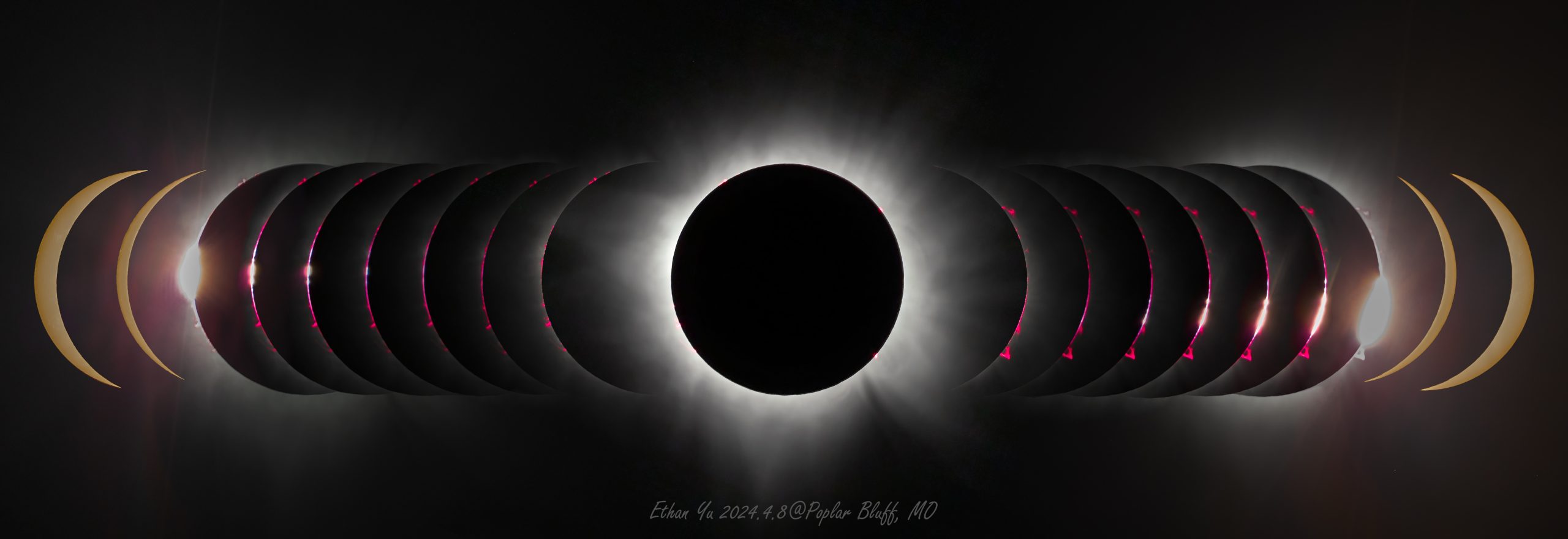 Moon ≈384,400 km · Sun ≈149.6 million kmTotal solar eclipse sequencePhotographer · Zhibo YuDate · 2024-04-08Equipment · —
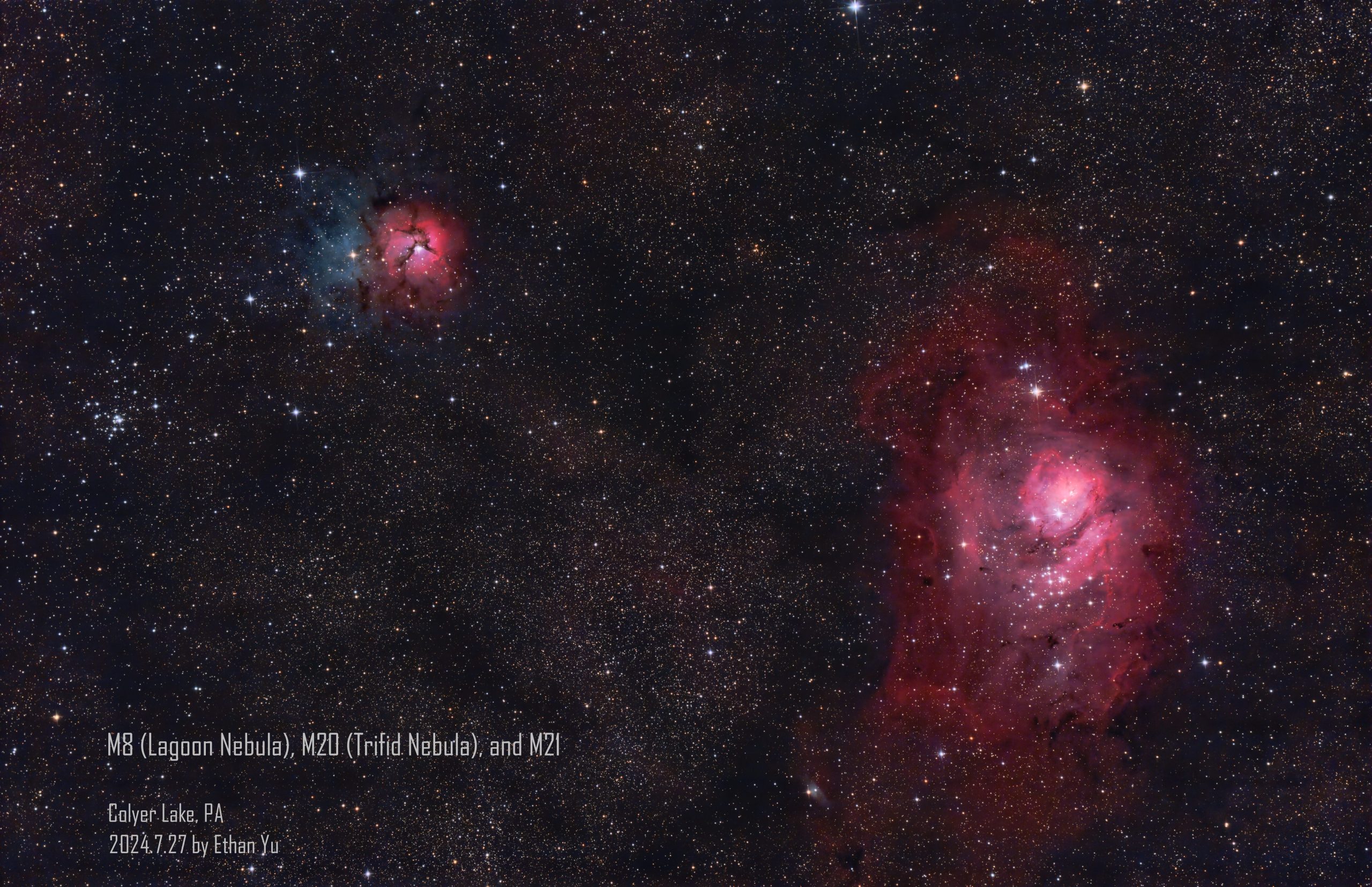 ≈4,000 light-years · M8 reference; other objects differM8, M20 and M21Photographer · Zhibo YuDate · 2024-07-27Equipment · —
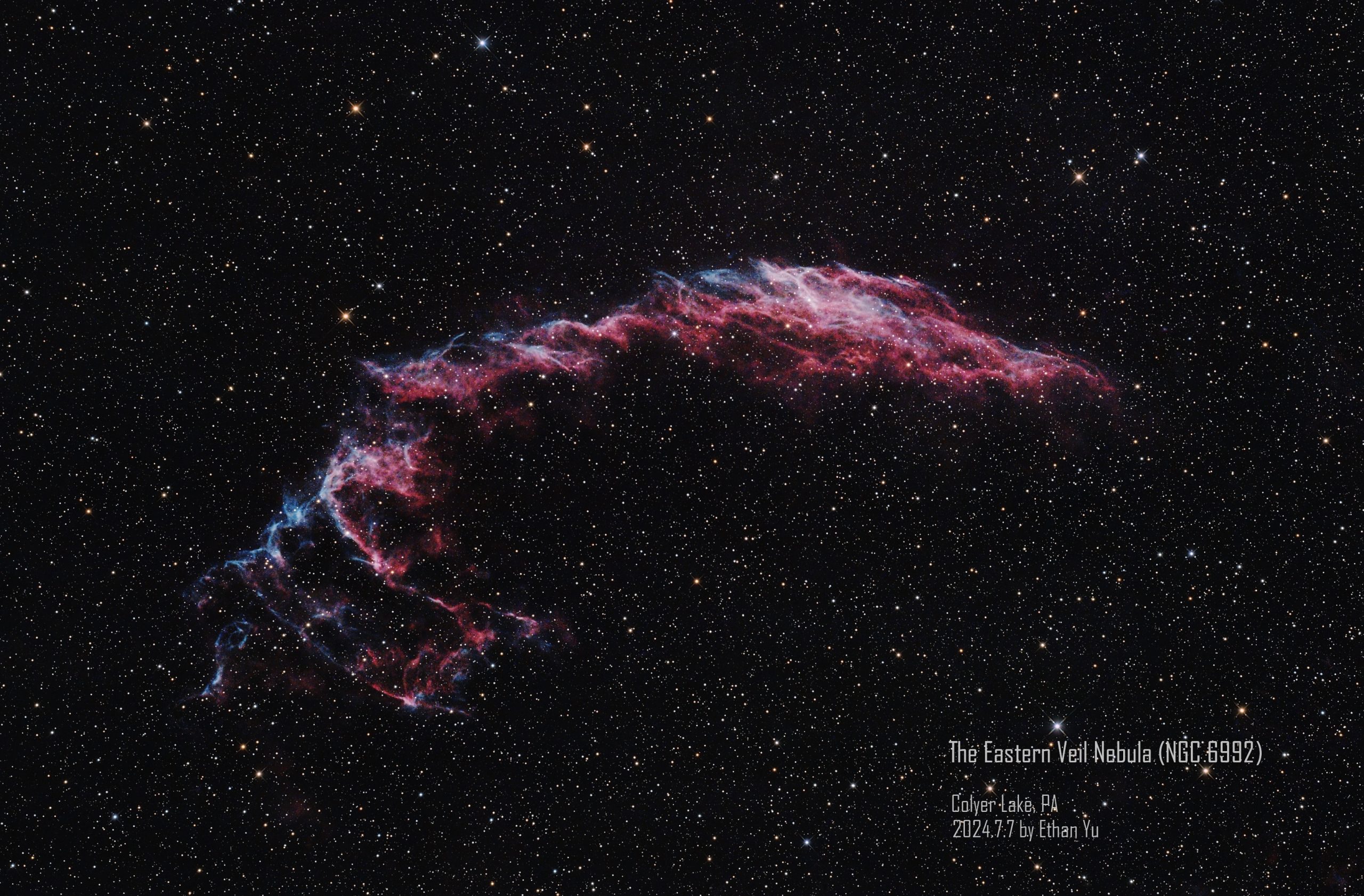 ≈2,400 light-years · Eastern VeilThe Eastern Veil Nebula (NGC 6992)Photographer · Zhibo YuDate · 2024-07-07Equipment · —
 0 km · Life on EarthA summer of discoveryPhotographer · —Date · 2026 campEquipment · —
 0 km · Life on EarthAstronomy in the neighborhoodPhotographer · —Date · 2026-06-29Equipment · —
 0 km · Life on EarthLearning by doingPhotographer · —Date · 2026 campEquipment · —
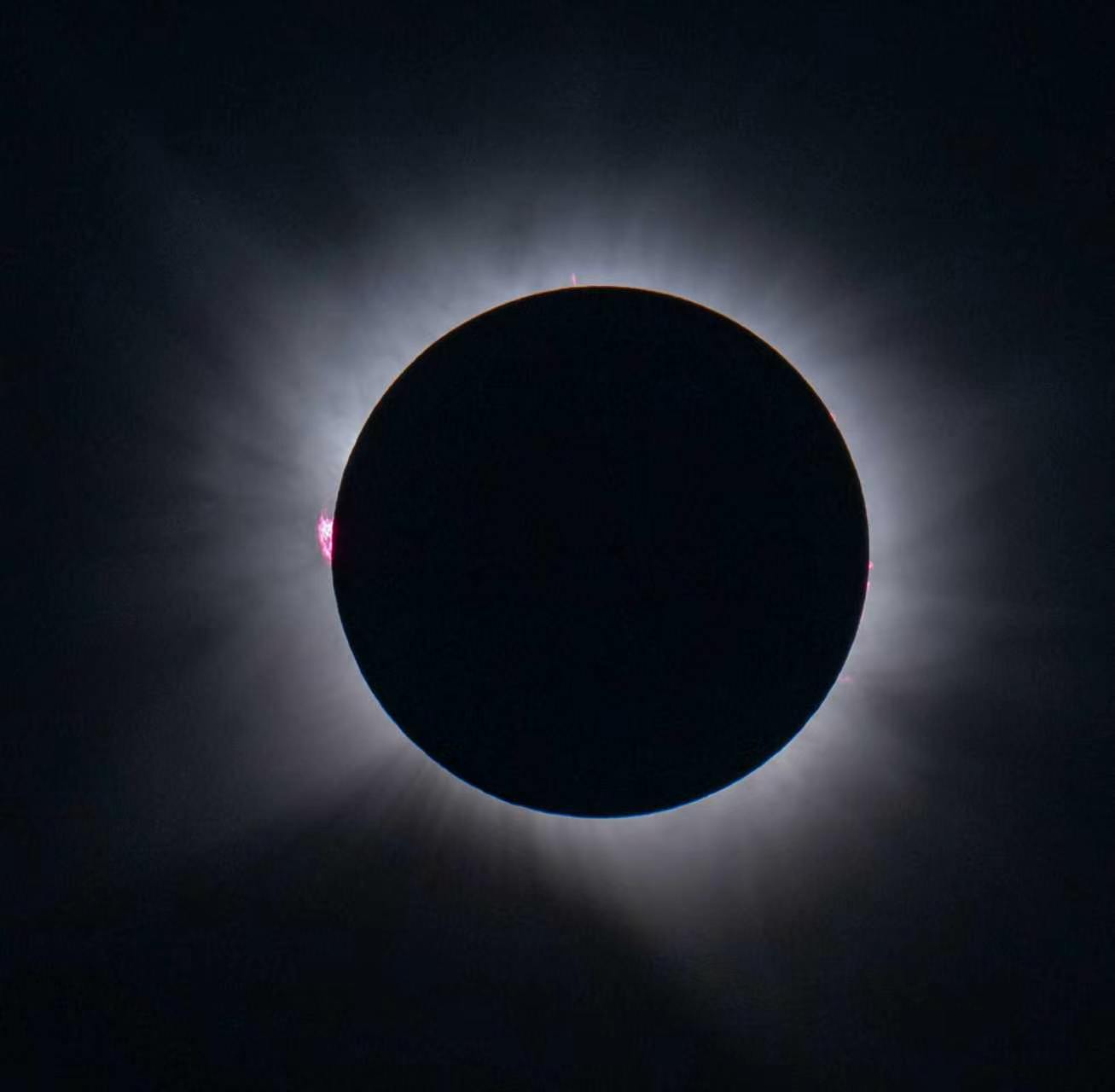 Moon ≈384,400 km · Sun ≈149.6 million kmA moment of totalityPhotographer · —Date · 2026-08-12Equipment · —
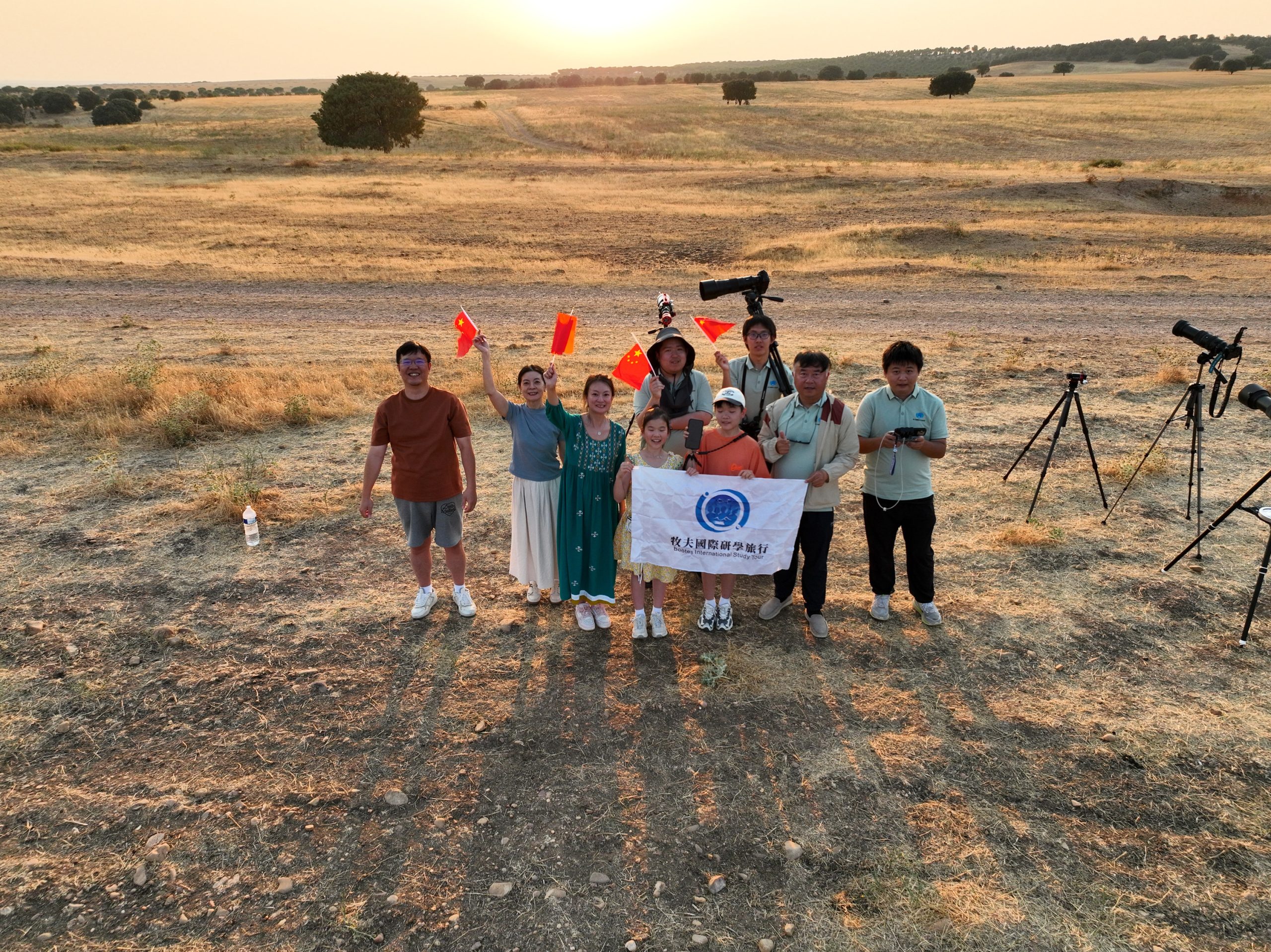 0 km · Life on EarthThe people behind the picturesPhotographer · —Date · 2026-08-12Equipment · —
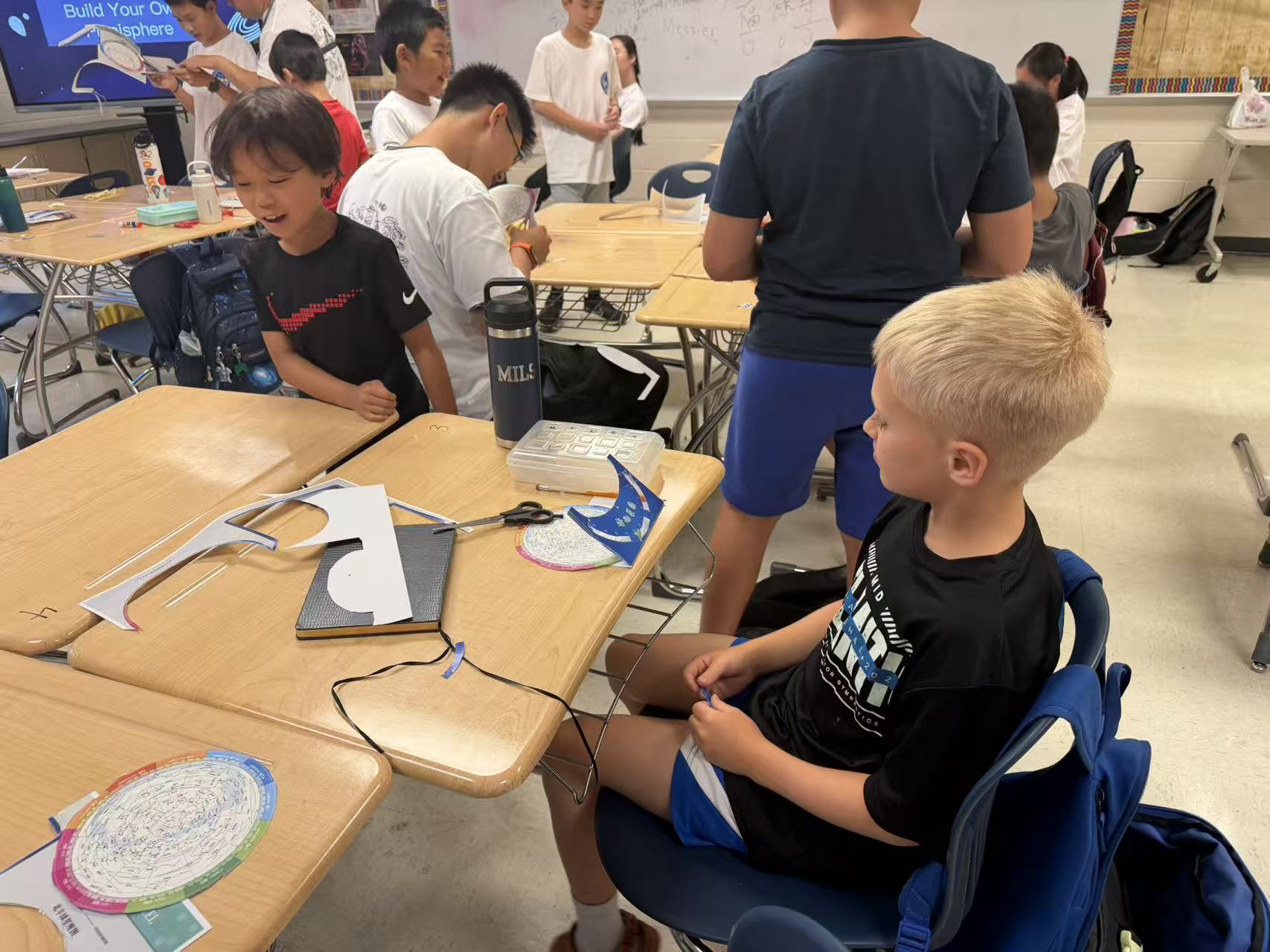 0 km · Life on EarthCuriosity, made by handPhotographer · —Date · 2026 campEquipment · —